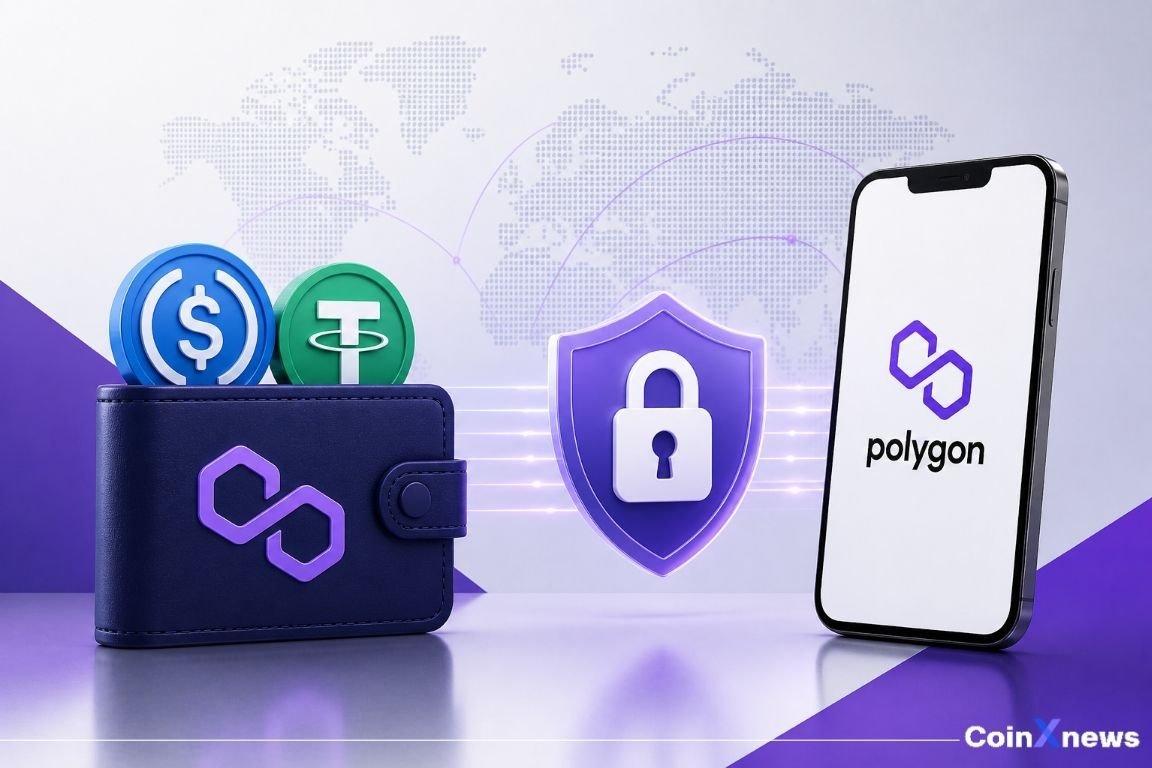
Polygon Wallet has launched a new private stablecoin payment feature that allows users to send stablecoins without publicly disclosing sensitive transaction details on-chain. The feature, called “Privately Send,” supports USDC and USDT transfers and is powered by Hinkal’s shielded payment infrastructure.
The launch of this feature aims to address one of the biggest privacy issues in blockchain payments. On public blockchains, anyone can track simple transactions using a block explorer. This means that wallet addresses, transfer amounts, and transaction history are often visible to the public. While this transparency helps with verification, it can also expose sensitive financial activity for users, businesses, and fintech platforms.
With this new feature, Polygon Wallet users will be able to make stablecoin payments while keeping the sender, recipient, and amount of money hidden from public view. The system uses zero-knowledge proof, which is a cryptographic method that allows transactions to be verified without revealing the underlying details of the transaction. In simple terms, the network can confirm that the payment is legitimate without revealing who sent the money, who received it, or how much was transferred.
The private transfer process is handled through Hinkal’s shielded infrastructure. Instead of showing a direct public transfer between two wallets, the transaction passes through a privacy layer that protects sensitive information while allowing the payment to be completed on-chain.
However, this feature is not designed to remove compliance controls. Polygon Wallet’s private payment option includes ‘Know Your Transaction’ or KYT screening before the transaction is executed. This means that transactions can be checked for risk signals before being processed, which helps prevent the use of private transfers for high-risk or restricted activities.
This feature could be useful for businesses, fintech companies, treasury teams, and individual users who want to use stablecoins without exposing their entire payment activity to the public. For example, companies may not want to make supplier payments, payroll movements, or treasury transfers publicly visible on-chain. Private stablecoin payments can help mitigate this risk, along with using blockchain settlements.
As demand for faster and cheaper digital transactions grows, Polygon is expanding its focus on stablecoin payments. By adding privacy and compliance-focused screening to USDC and USDT transfers, Polygon Wallet is establishing itself as another practical option for real crypto payments.
This initiative also reflects a larger trend in the blockchain industry, where privacy tools are becoming more important for mainstream adoption. As more users and businesses move towards stablecoinfocous-based payments, the ability to keep transaction details secure could become a key requirement.
Overall, Polygon Wallet’s new private stablecoin payment feature combines three key elements: stablecoin settlement, transaction privacy, and compliance screening. If widely adopted, it could make blockchain payments more suitable for ordinary users and businesses who need both privacy and trust.