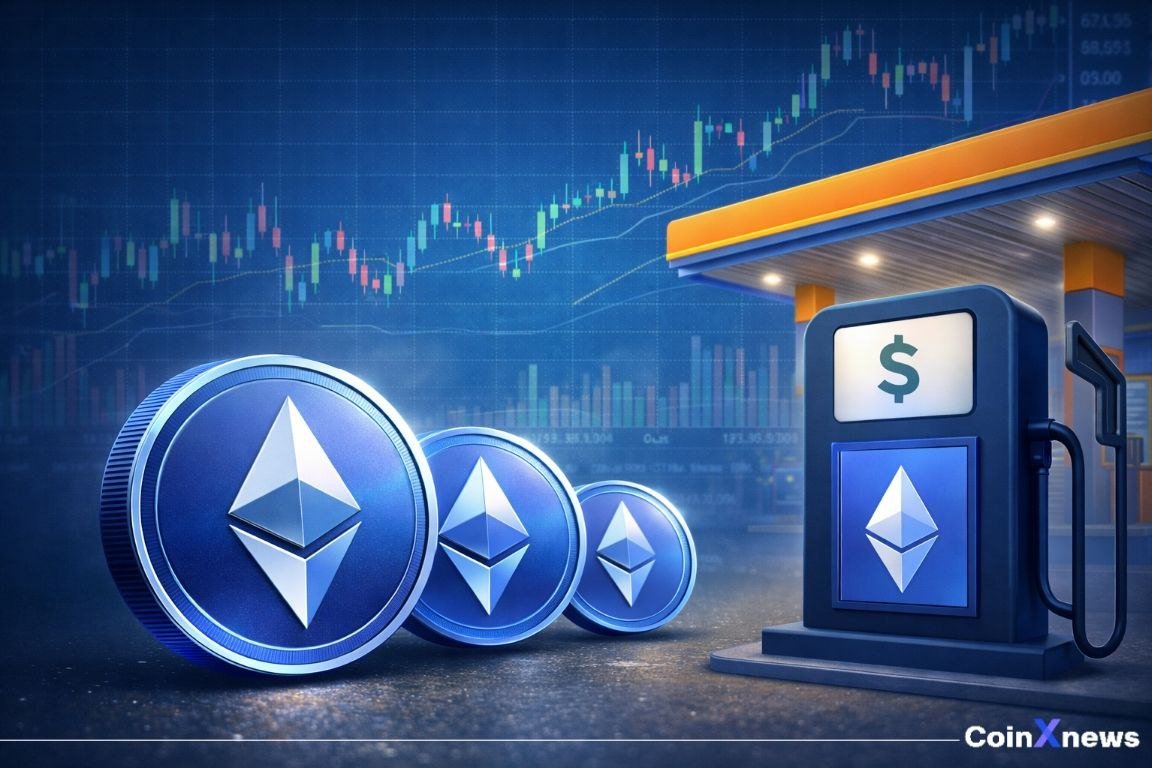
Ethereum users are experiencing something that was almost unthinkable just a few years ago — extremely cheap transaction fees on the mainnet. In March 2026, the cost of using Ethereum has dropped to some of the lowest levels seen in the network’s modern history, making it one of the most affordable times to interact with the blockchain.
Recent data from gas trackers shows that the average gas price has hovered around 0.196 Gwei, with some moments dipping as low as 0.055 Gwei. In real terms, this means that everyday blockchain actions now cost only a few cents.

For example, a basic ERC-20 token transfer now costs roughly $0.01 to $0.02, while a Uniswap trade averages around $0.14. Even more complex operations like bridging assets or borrowing in DeFi protocols are generally staying well below $0.12. This is a dramatic shift compared to previous years. In 2025, average gas fees were close to 6 Gwei, meaning costs have dropped by over 90% year-over-year.
Layer-2 Networks Are Taking the Pressure Off Ethereum
A major reason behind the falling gas fees is the growing dominance of Layer-2 networks.
Platforms like Arbitrum, Base, and Optimism now handle a large share of everyday crypto activity. Tasks such as trading, stablecoin transfers, and DeFi interactions are increasingly happening on these scaling networks rather than directly on Ethereum’s mainnet.
These Layer-2 systems bundle many transactions together and then submit them to Ethereum in batches. This approach dramatically reduces costs while still benefiting from Ethereum’s security.
Because of this shift, the Ethereum mainnet is now being used more as a secure settlement layer rather than the place where every transaction happens. With fewer direct transactions competing for block space, congestion has dropped and fees have naturally fallen.
Recent data shows Ethereum blocks are running at roughly 46% utilization, which is relatively moderate compared to the heavily congested periods seen during past bull markets.
Network Upgrades Helped Push Costs Even Lower
Ethereum’s recent upgrades have also played a key role in reducing fees.
The Dencun upgrade in 2024 introduced a feature known as proto-danksharding (EIP-4844). This change allowed rollups to post data to Ethereum in a much cheaper way using special data blobs.
Later, the Fusaka upgrade in 2025 expanded this system further by increasing blob capacity and improving data availability through a mechanism known as PeerDAS. Together, these changes significantly reduced the cost of storing Layer-2 transaction data on the Ethereum network.
As a result, rollups can now process high-volume activity while keeping costs extremely low.
Cheap Fees Are Opening the Door for Developers and Users
Lower gas fees are already having a noticeable impact on the ecosystem.
For developers, testing and deploying smart contracts on the Ethereum mainnet has become much easier and cheaper. Many teams that previously relied only on testnets are now experimenting directly on mainnet without worrying about high costs.
For users, the reduced fees mean they can interact with decentralized applications, mint NFTs, or move small amounts of crypto without paying large transaction costs.
This shift also removes one of the biggest barriers that once discouraged newcomers from exploring Ethereum.
Interestingly, the drop in fees comes at a time when Ethereum’s price is still under pressure.
ETH has been trading around $2,075, which is well below some of its highs from 2025. Analysts say several factors are contributing to the softer price performance, including broader market uncertainty and outflows from crypto investment products.
At the same time, blockchain data shows record levels of transaction activity, particularly across Layer-2 networks. Much of this activity comes from stablecoin settlements, DeFi interactions, and smart contract usage. This suggests that while price momentum has slowed, the underlying network activity remains strong.
The Next Big Upgrade Could Reduce Fees Even Further
Ethereum’s development roadmap continues to focus on scalability improvements.
The upcoming Glamsterdam upgrade, expected in the first half of 2026, aims to further increase the network’s efficiency. Plans include raising the gas limit to 200 million, introducing parallel transaction processing, and boosting overall throughput.
If successful, these changes could reduce transaction costs by as much as 78% while allowing the network to process significantly more activity.
However, the upgrade also raises an interesting question about the future structure of the Ethereum ecosystem. Some analysts believe the mainnet will remain primarily a settlement layer while Layer-2 networks continue to dominate everyday usage.
For now, Ethereum users are enjoying a rare window where interacting with the network is cheap, fast, and accessible.
The blockchain that once became infamous for $50, $100, or even $200 transaction fees during peak congestion is now allowing many operations to be completed for just a few cents.
Whether this trend continues or shifts again during the next market cycle remains to be seen. But at the moment, Ethereum’s dramatically lower gas fees are a clear sign that the network’s long-term scaling efforts are starting to pay off.